The short answer
Footvolley, or futevôlei as it is known in Brazil, is beach volleyball played with football skills. Two players stand on each side of a sand court, a net runs across the middle, and the ball goes back and forth using feet, thighs, chest, shoulders and head. The one thing nobody is allowed to do is touch it with their hands or arms. A team gets up to three touches before sending the ball back over.
If you have ever watched players keeping a ball alive on the beach without it ever dropping, you have already seen the spirit of the game.
Football technique, volleyball court, no hands allowed.
Where footvolley came from
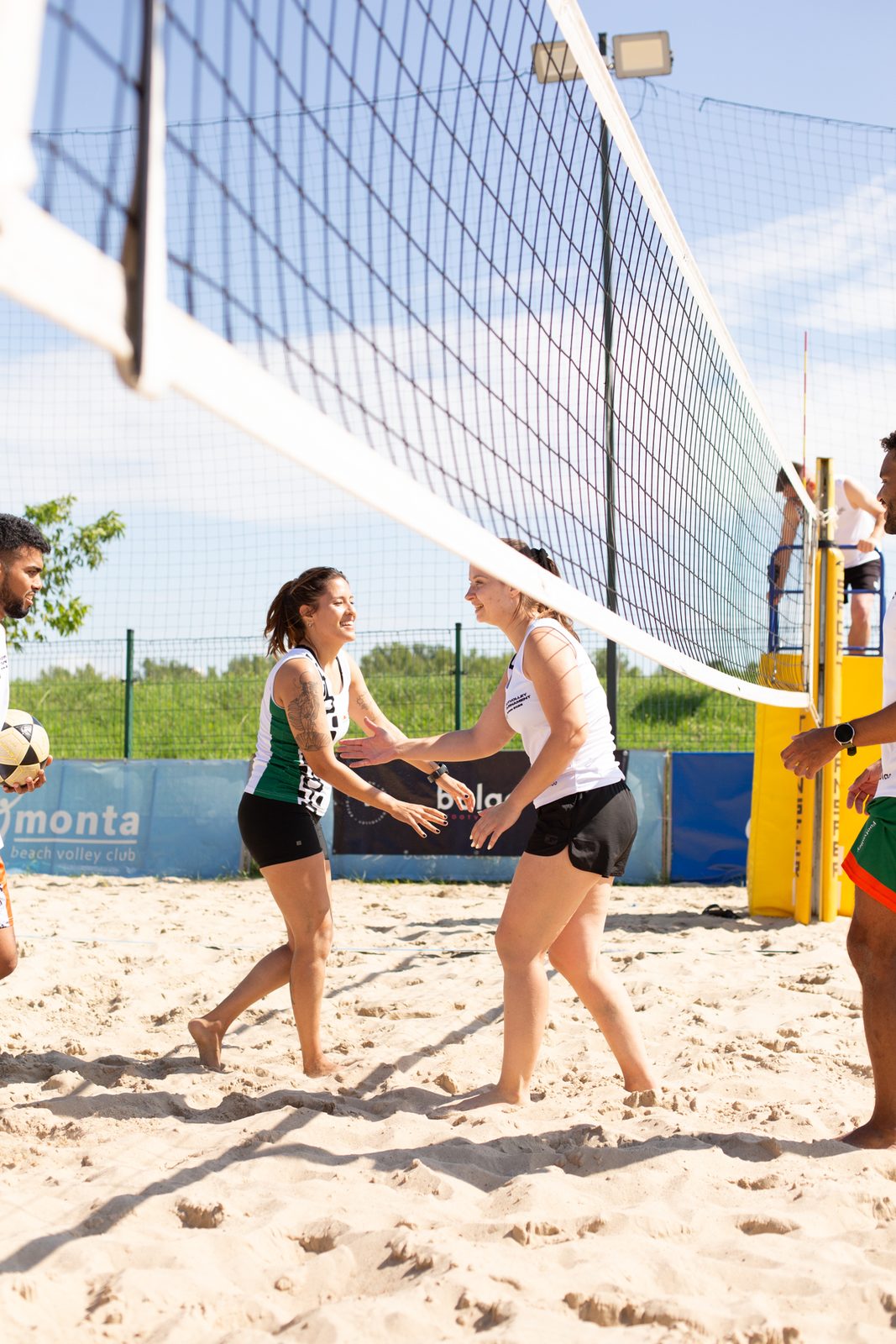
The game was born on the sand of Copacabana in Rio de Janeiro. In the mid-1960s a group of friends kept a ball moving in a passing circle near Rua Bolívar, feet only. When beach football was banned in the summer of 1965, Octávio de Moraes, known as Tatá, moved the game onto the volleyball courts by the boardwalk that sat empty after 1pm, and the first match over a net was played there.
A few months later the first net built only for footvolley went up near Rua Constante Ramos, with help from Flamengo's Almir Pernambuquinho. Through the 1970s the game settled into the nets of Ipanema, where a new generation grew up around it, Renan among them, who turned professional in 1985 at fifteen and is still named as the best to ever play.
Television carried it the rest of the way. In the 1980s the journalist Luciano do Valle put live two against two challenges on national TV, and footvolley spread from Rio across Brazil. Romário and Renato Gaúcho took to it in the 1990s, the first women's Brazilian championship came in 2006, and today the nets reach well beyond Brazil into Europe and the United States. The name is a straight read of the Brazilian vôlei de pé, volleyball played with the feet.
History drawn from Rio Memórias and Instituto Footvolley4ever.
Through the 1970s it spread along the Brazilian coast to Recife, Santos, Florianópolis and beyond, and it became a favourite warm-up and showtime game for footballers. Names like Romário, Ronaldinho and Ronaldo all played it. By the 1980s footvolley had reached Europe, carried over largely by Portuguese players and communities.
A sport built on touch
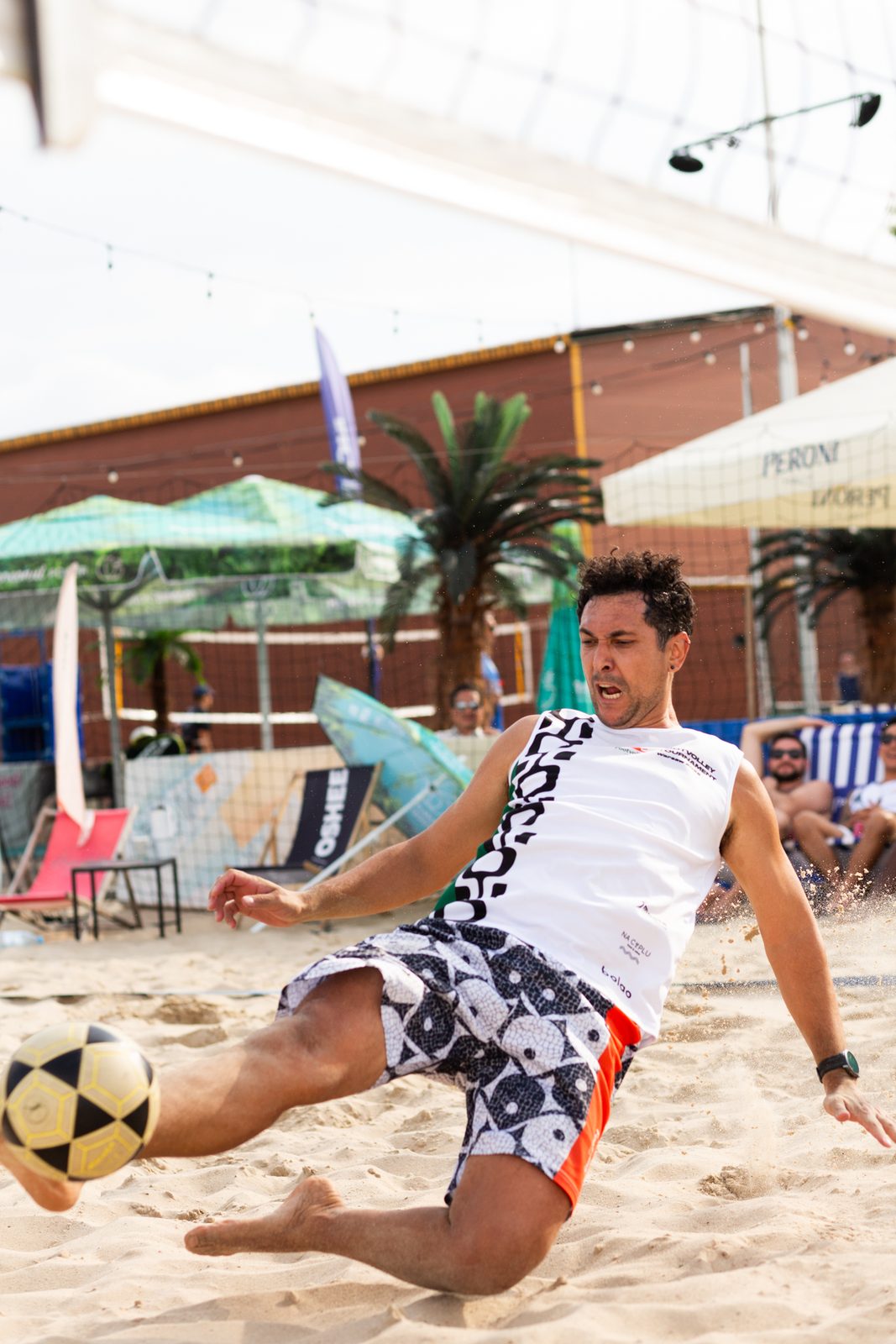
Because hands are off the table, every contact has to be cushioned and aimed with parts of the body that were never designed for it. That is what makes footvolley so satisfying to watch. A clean setup with the chest, followed by a thigh control and a shot off the foot, looks effortless and takes years to make look that way.
Footvolley rules, in plain terms
The framework comes from beach volleyball and the ball control comes from football. Here is what a standard match looks like:
- Two players per side. No substitutions during a set, so stamina and chemistry matter.
- Sand court with a net across the centre. The net stands about the height of a beach volleyball net, a little over two metres.
- No hands, no arms. Feet, thighs, chest, shoulders and head are all fair game.
- Up to three touches per side before the ball has to cross the net.
- A football is used, not a volleyball, controlled with the same first touch you would use on a pitch.
- You score when the ball lands in the opponents' court, when they send it out, or when they break a rule.
The international rulebook is kept by the FIFV, the International Footvolley Federation, with regional bodies such as the European Footvolley League running their own tours and championships. Formats and net heights shift a little between leagues, but the heart of the game stays the same everywhere.
Footvolley vs beach volleyball vs football
People often ask how it sits between the two sports it borrows from. The quickest way to see it:
Footvolley
Sand court, net, two a side. Ball controlled with feet and body, never hands. A football, three touches.
Beach volleyball
Same sand court and net, two a side. Played entirely with the hands and arms, with a lighter volleyball.
Football
Grass pitch, eleven a side, goals at each end. Shares the no-hands rule and the first touch, little else.
So footvolley takes the court and the net from one and the touch from the other, then asks you to do it all barefoot on hot sand.
Footvolley around the world
What started on one beach now runs across more than fifty countries. Brazil is still the spiritual home and the level there is extraordinary, but Europe has grown fast, with strong scenes in Portugal, Spain, Italy, Germany and the Netherlands and a European Championship that draws serious crowds. Asia has its own federation and rising teams, and there is a professional tour in the United States with its own faster ruleset. World-level competition keeps the standard climbing every year.
Footvolley in Poland
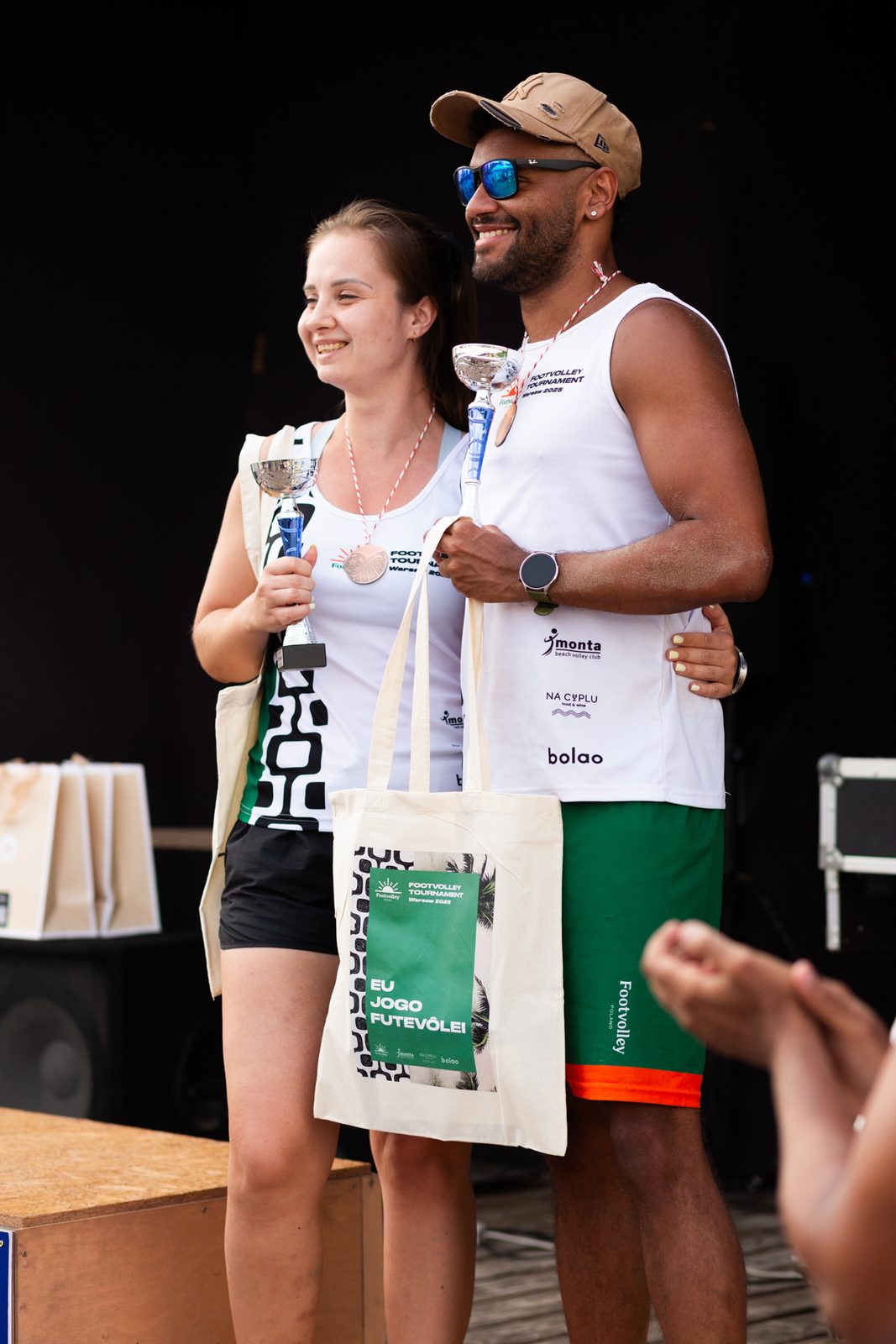
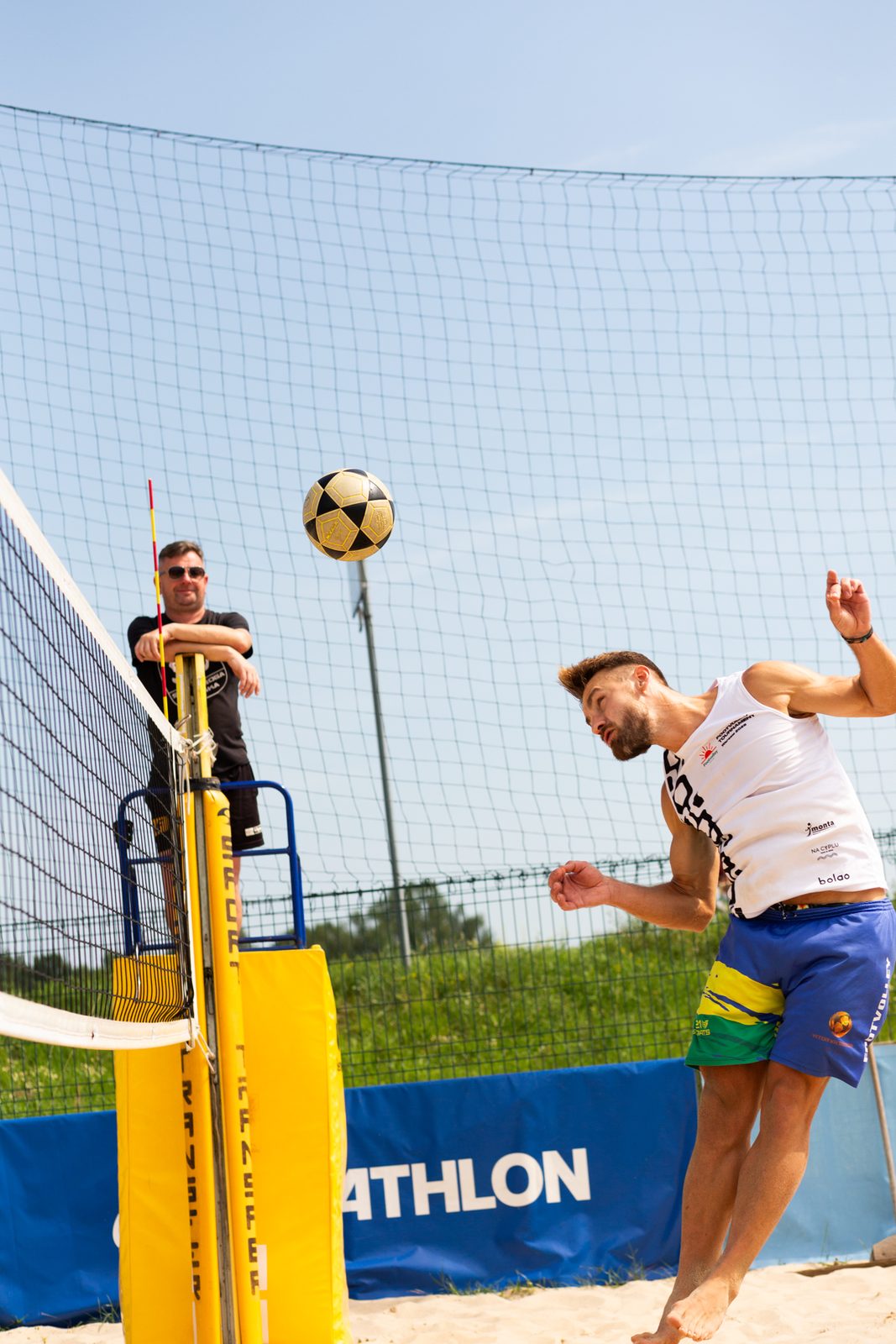
Poland came to the game late, and that is exactly why we started Footvolley Poland in 2023. We are the first footvolley organization in the country, built to give the sport a real home rather than the odd kickabout. Since then we have run a tournament every summer in Warsaw, brought Brazilian coaches onto the sand, and welcomed players from eight and more countries to play here.
If you are searching for footvolley in Poland or footvolley in Warsaw, this is the place it actually happens.
How to start playing
You do not need to arrive as a footballer or a volleyball player. Most people pick up the basics in a single session and spend years enjoying the rest. There are three easy ways in with us:
- Weekly sessions on the sand at Monta Beach Volley Club in Warsaw, open to newcomers and regulars.
- Beach camps with our coaches, including trips abroad where you train for several days straight.
- Our summer tournament, with an OPEN bracket for anyone who wants to try competitive play.
Come along, get a feel for the first touch, and see why a sport invented on Copacabana has people hooked on Polish sand.